Do I need a permit to dispose of commercial waste in Heston?
If you run a business in Heston, the short answer is usually: you may need a permit or licence depending on how the waste is being stored, moved, and collected. That sounds a bit fuzzy at first, and to be fair, it is. Commercial waste rules are not always explained in plain English, and a lot depends on the exact setup: who owns the waste, who collects it, where it sits before collection, and whether the waste is being carried in a vehicle that needs permission to use certain routes or disposal points.
What most people really want to know is simpler: can I just put the rubbish out, ring someone, and be done with it? Sometimes yes. Sometimes no. The safest approach is to understand when a permit is needed, when it is not, and how to handle commercial waste in a way that avoids fines, missed collections, or awkward conversations with the council. In this guide, we break it down clearly, with a local Heston focus and practical steps you can actually use.
Expert summary: If your business waste is being removed by a legitimate carrier, the main compliance issue is usually not a "permit to throw it away" in the everyday sense, but whether the storage, presentation, transport, and disposal method are lawful and properly arranged. That distinction matters more than most people realise.
- Understand what counts as commercial waste.
- Check whether you need permission for storage or placement.
- Use a compliant collection and disposal route.
- Keep records so you can show duty of care.
Table of Contents
- Why this question matters
- How the process works in practice
- Key benefits of getting it right
- Who needs this guidance most
- Step-by-step guidance
- Expert tips for smoother waste handling
- Common mistakes to avoid
- Tools, resources and recommendations
- Law, compliance and best practice
- Options and comparison
- Real-world example
- Practical checklist
- Conclusion
- Frequently asked questions
Why Do I need a permit to dispose of commercial waste in Heston? Matters
This question matters because commercial waste is not treated the same as household rubbish. A box of packaging from a small office, old stock from a shop, broken shelving from a unit, and construction debris from a refurb job can all fall into different categories and trigger different obligations. If you mix them up, things become messy quickly. Not dramatic, just messy in the very expensive kind of way.
In Heston, as in the rest of London, businesses are expected to handle waste responsibly and prove that it has been transferred to an authorised carrier or taken to an appropriate facility. The practical issue is often not a permit in the old-fashioned sense of a printed pass or sticker. It is more about whether you have the right arrangements in place for storage, collection, transport, and disposal. If you place bins on a public pavement, skip a formal collection, or use the wrong vehicle route or storage method, permission can suddenly become relevant.
That is why business owners, landlords, site managers, and even small home-based companies should think about waste compliance early. One short phone call or one rushed clearance can lead to penalties or refusals later. And nobody wants their business entrance looking like a half-finished tidy-up at 7:30 on a wet Tuesday morning.
If your waste is part of a larger office or commercial clearance, it may also help to look at business waste removal and, where office spaces are involved, office clearance support. Those services are relevant because they usually include the planning and handling that keep you on the right side of local rules.
How Do I need a permit to dispose of commercial waste in Heston? Works
Let's clear up the mechanics. In everyday language, people say "permit" when they really mean one of several different things:
- permission to place waste bins or sacks on land that is not privately owned;
- permission to store waste in a shared area or on a managed site;
- agreement with a waste contractor to collect and transport waste lawfully;
- confirmation that the receiving site is authorised to accept that waste type.
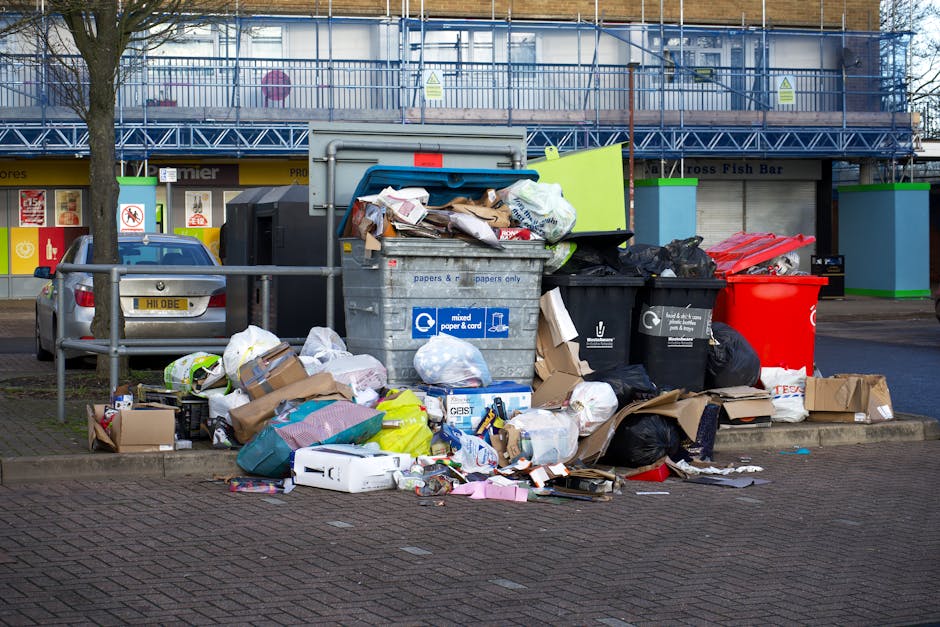
So, do you need a permit? Sometimes the answer is yes, but it depends on the setup. For example, if your business waste sits in a private yard until collection, you may not need a separate permit for that storage arrangement. But if sacks are left on a pavement, in a communal access area, or in a location that affects public access, permission or a licence may be needed. That is where local rules and site-specific conditions start to matter.
Commercial waste also needs a proper transfer trail. In the UK, businesses are generally expected to keep records showing what was collected, by whom, and where it went. This is part of good duty of care practice. In plain English: you need to be able to show that your waste did not just disappear into the void. It went somewhere lawful.
For many Heston businesses, the simplest route is to use a waste service that already knows how to handle business waste correctly. That reduces the admin burden and helps avoid accidental non-compliance. If you are comparing options, it is worth reading about waste removal services and the business-specific approach offered through commercial waste collection.
One thing people often miss: not all waste is equal. A cardboard-heavy office clearance, a builder's skip load, and a mixed retail clean-out can each have different handling requirements. A basic "yes/no" permit question becomes clearer once you identify the waste stream first.
Key Benefits and Practical Advantages
Getting the permit and compliance side right is not just about avoiding trouble. It has real practical upsides. The best-run businesses in Heston tend to treat waste management like part of operations, not an afterthought. That approach saves time, keeps the premises tidy, and makes it easier to plan collections without disruption.
- Lower risk of fines or enforcement issues: If your waste is stored or removed properly, you reduce the chance of avoidable problems.
- Cleaner and safer premises: Less clutter means fewer trip hazards, less vermin risk, and a better impression for staff and visitors.
- Better scheduling: Once you know the rules, you can plan collections around opening hours and deliveries.
- Stronger records: Clear paperwork helps if you are ever asked how the waste was handled.
- Less stress: Truth be told, most business owners would rather spend their time running the business than deciphering waste logistics.
There is also a commercial angle. A tidy site is easier to manage. Staff work faster when they are not stepping around bins and broken furniture. Customers notice too, even if they never mention it. A clean back-of-house area often signals a business that pays attention to detail. Small thing, but it matters.
If your waste includes old furniture, office desks, or reception items, it can be worth looking at furniture disposal and furniture clearance options, especially when bulky items are getting in the way of day-to-day operations.
Who This Is For and When It Makes Sense
This guidance is useful for a wide range of people, not just large companies. In our experience, permit and waste-handling questions show up most often when a business is changing shape: moving premises, refurbishing, downsizing, or simply dealing with more waste than usual. A Monday-morning tidy-up can suddenly turn into a bigger question than anyone expected.
It is especially relevant if you are:
- running an office, shop, cafe, salon, or small warehouse;
- managing a refurbishment or fit-out;
- clearing builder's waste from a commercial project;
- disposing of stock, packaging, fixtures, or old furniture;
- responsible for a property with shared access or limited storage;
- trying to make sure your business keeps proper waste records.
For construction or refurbishment-related waste, the question can become more sensitive because materials such as plasterboard, timber, tiles, and mixed rubble often need more careful handling than office rubbish. In that situation, builders waste clearance is often the more relevant route.
If the business waste is actually part of a larger property clearance, you may also want to look at related services such as house clearance, home clearance, or flat clearance. They are not the same as commercial waste disposal, but they can be useful when a mixed-use property or business-from-home setup is involved.
Step-by-Step Guidance
If you want a simple way to approach this, follow these steps in order. It keeps the process calm, which is a nice change from some waste jobs, honestly.
- Identify the waste type. Separate general commercial waste from bulky items, electrical equipment, construction debris, and anything hazardous.
- Check where the waste will be stored. Private land, shared land, and public land are treated differently.
- Ask whether permission is needed. If bins, sacks, or containers will sit in a public or semi-public area, there may be permit requirements.
- Choose a compliant removal route. Use a service that can collect, transport, and dispose of the waste lawfully.
- Keep your transfer records. Save invoices, collection notes, and any written confirmation of disposal arrangements.
- Review regularly. If your waste volumes change, reassess the arrangement rather than assuming last month's setup still works.
A quick example: a small design studio in Heston clears out packaging, old monitors, and two broken desks. If everything is kept inside the premises and collected by a legitimate waste carrier, the business may not need any separate "permit" in the everyday sense. But if the desks are left on the street for pickup, or if the waste is stored in a communal access area, permission rules can change fast. Same waste, different outcome.
That is why the location and method matter just as much as the waste itself.
Expert Tips for Better Results
A few small habits make commercial waste management a lot easier. Nothing fancy. Just the kind of things that save time later.
- Separate waste at source. Cardboard, general waste, furniture, and electrical items are easier to manage when they are not mixed.
- Use a labelled holding area. Even a simple corner in a storeroom can stop people from dumping waste in the wrong place.
- Book before the pile becomes a problem. Waiting until the corridor is full usually means more stress and fewer collection options.
- Ask how the waste will be handled. Reputable providers should be able to explain the process without jargon overload.
- Think about access. Narrow lanes, loading bays, and shared entrances can affect whether a permit or extra permission is needed.
If your business has regular clear-outs, it can also help to review your broader site management. For example, offices with older furniture often benefit from a planned rotation of disposal and replacement. That is where recurring services like office clearance or targeted furniture disposal can be practical, not just convenient.
One more thing: if a provider is vague about how the waste will be handled, that is a red flag. Not always a disaster, but enough to slow down and ask questions. A clear answer should be easy to get.
Common Mistakes to Avoid
Commercial waste problems usually do not come from one giant failure. They come from little assumptions. The classic ones are almost always the same.
- Assuming business waste can be treated like household rubbish. It often cannot.
- Leaving waste on public land without checking permission. That can trigger enforcement issues quickly.
- Mixing different waste types together. This can complicate collection and disposal.
- Using an unverified collector. Cheap is not the same as compliant.
- Ignoring bulky item rules. Furniture, appliances, and site waste may need separate handling.
- Failing to keep records. If a problem arises later, paperwork matters.
Another mistake, and this one is surprisingly common, is waiting until a lease end or inspection deadline before arranging clearance. By then, every decision feels rushed. The lift is booked, the movers are around the corner, and somebody is still asking where the old filing cabinets went. Not ideal.
If you are clearing out stored items alongside waste, you may also find it useful to review related property clearance services such as loft clearance or garage clearance. They are not a substitute for proper waste disposal, but they can help when the job is mixed and space is tight.
Tools, Resources and Recommendations
You do not need a complicated toolkit to manage commercial waste properly. A few basic systems go a long way.
| Tool or resource | What it helps with | Why it matters |
|---|---|---|
| Waste inventory list | Tracking what needs removing | Helps separate general, bulky, and specialist waste |
| Collection log | Recording dates and removals | Useful for duty of care and internal checks |
| Photo record | Showing the condition and volume of waste | Makes quotes and planning more accurate |
| Site access notes | Describing entry points, restrictions, and loading areas | Reduces disruption on collection day |
| Service comparison | Checking collection scope and compliance approach | Helps avoid hidden gaps in service |
For businesses looking at cost and planning, it is worth reviewing pricing and quotes before you book. That does not tell you the whole compliance story, of course, but it gives you a better feel for what the service includes and whether the job has been understood properly.
You may also want to read about recycling and sustainability if your business is trying to reduce landfill use or improve environmental handling. That is becoming more important across London, and it often starts with simple sorting habits.
Law, Compliance, Standards, or Best Practice
Here is the careful answer. In the UK, businesses have a duty to manage waste responsibly. The practical details can vary depending on the waste type and the way it is collected, stored, or transported. For many business owners, the main focus should be on lawful handling, authorised collection, and keeping evidence of what happened to the waste.
Compliance usually means:
- keeping waste secure and stored appropriately;
- ensuring it is collected by a suitable and legitimate carrier;
- avoiding illegal dumping or fly-tipping risk;
- separating recyclable and non-recyclable materials where practical;
- maintaining records and transfer documentation.
If your waste is placed on public land, near a footway, or in an area shared with neighbours or other businesses, you may need explicit permission or a permit from the relevant authority or land manager. That is especially true where the waste might obstruct access, affect safety, or create an environmental nuisance. The exact requirement depends on the setting, so it is wise not to guess.
Best practice is simple: do not assume, do not leave waste where it "seems fine", and do not rely on verbal reassurance alone if the arrangement is unusual. If anything feels borderline, get it checked before collection day rather than after. That small pause can save a bigger headache.
And yes, this is one of those topics where boring paperwork beats a shiny shortcut every single time.
Options, Methods, or Comparison Table
Most businesses in Heston will choose one of three practical routes. The right one depends on waste type, volume, access, and how quickly it needs to go.
| Option | Best for | Pros | Watch out for |
|---|---|---|---|
| Planned business waste collection | Regular commercial rubbish | Simple, repeatable, easier to document | Needs the right storage and access setup |
| One-off clearance | End-of-lease, refit, or stock clear-outs | Fast, less long-term admin | Needs clear waste classification and access planning |
| Specialist waste handling | Bulky, mixed, or higher-risk items | Better for complex jobs | May require extra checks or separate arrangements |
In real life, the "best" method is usually the one that fits your waste type without overcomplicating things. A small office refresh is not the same as a full unit strip-out, and trying to treat them the same is where people often go wrong.
Case Study or Real-World Example
Picture a small marketing agency in Heston that has just moved to a new workspace. They have old desks, a broken printer, packaging from new furniture, and a few sacks of general waste from the move. Initially, they assume everything can go in one pile at the back of the building until collection day.
Then they realise the back entrance is shared with another tenant, the pavement gets busy at lunchtime, and the printer needs separate handling. Suddenly, the "quick tidy-up" becomes a small logistics project. Nothing unusual, just one of those jobs that grows arms and legs.
They split the waste into categories, keep the items inside the premises until collection, and book a compliant removal service that explains what can be taken together and what needs separate handling. The result is straightforward: less confusion, safer access, and no awkward last-minute scrambling.
That example shows the main point well. The issue is rarely the waste itself. It is the route the waste takes from office floor to final disposal.
Practical Checklist
Use this before arranging commercial waste disposal in Heston:
- Have I identified exactly what kind of waste I am dealing with?
- Is any of it bulky, electrical, recyclable, or construction-related?
- Will the waste be stored on private land, shared land, or public land?
- Do I need permission for where it will be placed before collection?
- Have I chosen a legitimate collection route?
- Do I know what records or notes I should keep?
- Is access clear for the collection team or vehicle?
- Have I separated items to avoid delays or extra charges?
- Have I checked whether the provider can handle the waste type properly?
- Have I considered recycling or reuse where appropriate?
Quick takeaway: If the waste is staying on your own premises and is collected properly, you may not need a separate permit in the everyday sense. If it touches public land, shared access, or unusual storage conditions, check first. That is the safest line to take.
Conclusion
So, do you need a permit to dispose of commercial waste in Heston? Sometimes yes, sometimes no, and the difference comes down to the details. Where the waste is stored, how it is collected, and whether public or shared space is involved will often determine the answer. That is why a careful, practical check is always worth doing before the waste starts piling up.
If you remember just one thing, make it this: commercial waste is not simply about getting rid of rubbish. It is about handling it in a way that is safe, lawful, and easy to prove later. That sounds formal, but in practice it just means fewer surprises and a smoother day.
If you are planning a clearance, working through a refurbishment, or trying to sort out business waste without causing disruption, it helps to speak to a service that understands both the practical and compliance sides of the job. A bit of clarity upfront can save a lot of time later, and honestly, everyone sleeps better for it.
Get a free quote today and see how much you can save.
When the job is done properly, the space feels lighter, quieter, and easier to work in. That relief is real.
Frequently Asked Questions
Do I always need a permit for commercial waste in Heston?
No, not always. If the waste is stored on your own private premises and collected through a compliant arrangement, a separate permit may not be needed. If it is placed on public or shared land, permission may be required.
What counts as commercial waste?
Commercial waste is any waste produced by a business activity. That can include office rubbish, packaging, retail waste, old furniture, refurbishment debris, and similar material created through work.
Is business waste the same as household waste?
No. Business waste usually has different handling, storage, and record-keeping requirements. Even if the items look ordinary, the legal treatment can be different.
Do I need paperwork when my commercial waste is collected?
In most cases, yes, some form of record is wise and often expected. Keep collection notes, invoices, or any documentation that shows what was removed and by whom.
Can I leave business waste on the pavement outside my premises?
Not without checking first. Placing waste on public land can create permission issues, block access, or trigger enforcement action. It is best avoided unless the arrangement has been properly approved.
What if my waste includes broken furniture or office equipment?
Bulky items often need separate handling. Furniture and equipment may need specific removal or disposal arrangements, especially if they are heavy, awkward, or mixed with other waste streams.
Does a small home office need the same rules?
It depends on the waste and the setup. If you are producing business waste, it is sensible to treat it as commercial waste, even if the office is run from home. The key question is how and where it is stored and removed.
How do I know if a collector is legitimate?
Ask how they handle the waste, what type of jobs they do, and what records they provide. A professional service should be clear, consistent, and comfortable explaining the process without dancing around the question.
What is the biggest mistake businesses make with waste disposal?
Assuming the rules are the same as for household rubbish. That single assumption causes a lot of avoidable trouble, especially when waste is left in the wrong place or mixed together carelessly.
Can recycling help with compliance?
Yes, if it is done properly. Separating recyclable materials can reduce disposal pressure, improve efficiency, and support better waste management overall. It is not a magic fix, but it helps.
When should I book a commercial waste collection?
Book as soon as you know the scale of the job. If the clearance is tied to a move, inspection, or refurbishment deadline, leaving it too late tends to create avoidable stress and limited options.
Where can I learn more about your approach to waste handling?
You can review the company's about us page for background and read the insurance and safety information for peace of mind on how jobs are managed.